

Other Places of Interest
Ramón Santaella Park
Located in the heart of Baena, this small park has everything needed for relaxing, strolling, or even enjoying drinks and meals at some of its kiosks.
The park combines French and English styles in its walkways, some paved and others with the characteristic Andalusian gravel. In the center, there’s an octagonal music pavilion made of cast iron. On the eastern side, there is a pergola with masonry columns covered in wood, where wisteria, roses, and honeysuckle grow.
The difference in height on the eastern side is managed with stepped flowerbeds and stone walls.
It also features several fountains, a small playground, and benches scattered throughout the park.


Nuestra Señora de Guadalupe Path
Municipal Historical and Archaeological Museum
The museum is housed in the historic Casa de la Tercia, located in the heart of the city’s old town. This building, constructed between 1792 and 1795, was originally used as a grain and seed store, as well as an olive oil warehouse. It was initially intended to centralise church tithes and other royal revenues.
After the Mendizábal Expropriation of 1841, the Casa de la Tercia changed hands and lost its original purpose. In the 20th century, it was transformed into an inn and later became a prison during the Spanish Civil War (1936-1939).


Olive Groves and Oil Museum
In the center of Baena, the old mill of Don José Alcalá Santaella has been transformed into a tribute to olive oil. Its more than 800 m² display 19th-century machinery, such as the mill with truncated-cone stones and the hydraulic press, along with rooms dedicated to the history and evolution of olive growing.
The upper floor presents both traditional and modern uses of olive oil, a library, an “olive oil workshop,” and a collection of over three thousand labels, ending with a tasting of oils from the Baena Designation of Origin. An essential visit to understand the olive oil culture of the Subbética region.
Palacio Square
The central point of Baena’s Arab and medieval quarter, this square is home to another of the city’s most important symbols, the Iberian Lion of Baena, a bronze replica of the original housed in the Archaeological Museum of Madrid. The Francisco Valverde Square, also known as Plaza Vieja, is named after the great 19th-century Baena historian and writer D. Francisco Valverde y Perales, who left us with the “History of the Town of Baena”.
This Arab district hosts the city’s most important monuments, such as the Church of Santa María la Mayor, the Convent of Madre de Dios, and the remains of the Castle.
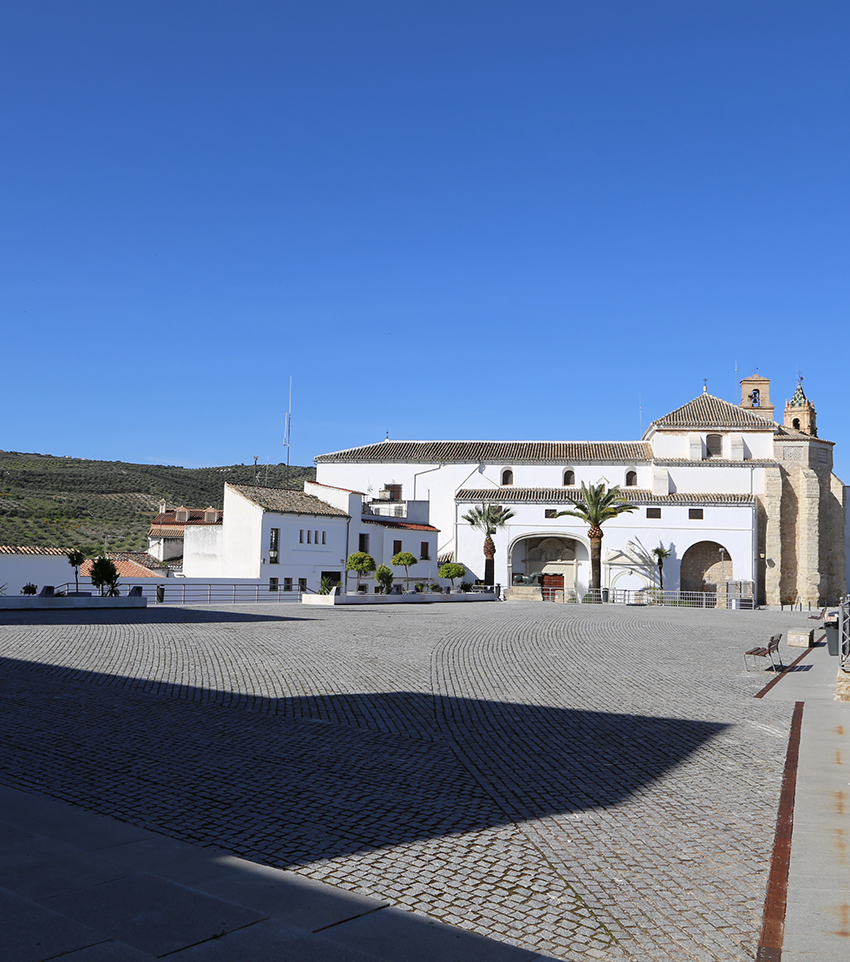

Baena Castle
Walls and Arches of Baena
Baena preserves significant sections of its old wall, in some areas integrated into houses built over the centuries. Remains of towers and arches recall its defensive role, linked to the Castle-Alcazaba that once dominated the town.
Its origin dates back to the frontier times between the Christian and Muslim kingdoms, when the city frequently changed hands during successive campaigns. After the Christian conquest in the 13th century, the walls continued to play a strategic role, marking the town’s limits and protecting its buildings.
Today, these remains allow visitors to imagine medieval Baena and stroll through corners full of history, where popular architecture blends with its fortified heritage.

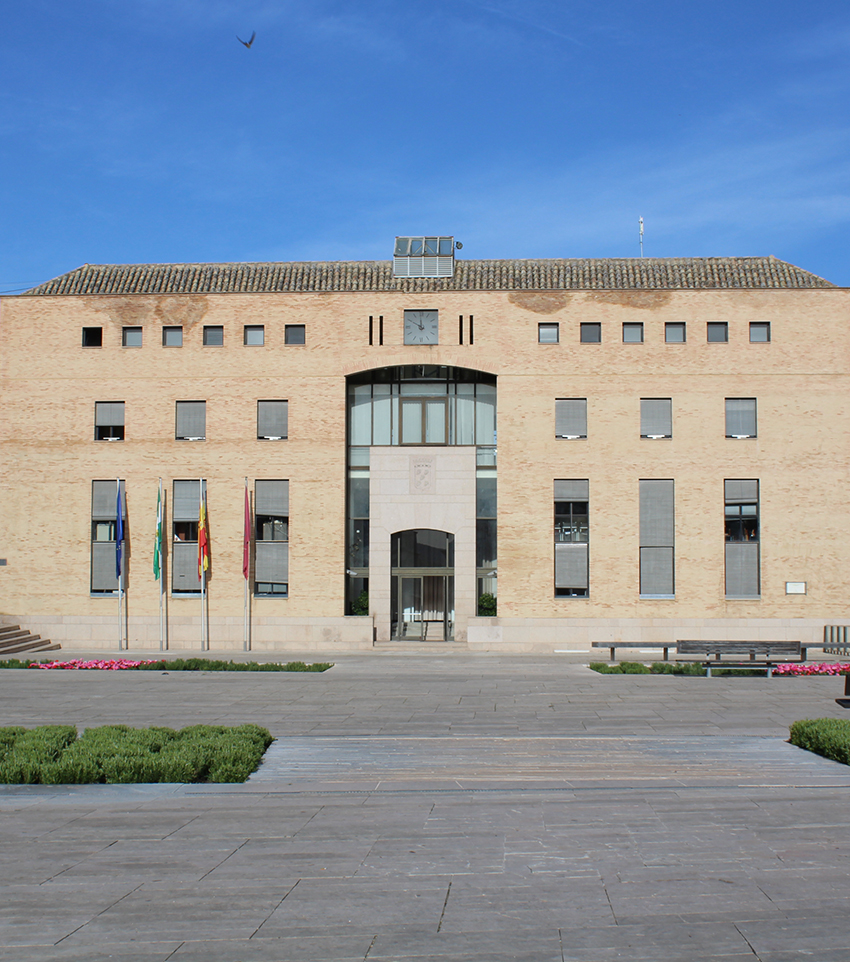
Constitución Square
Virrey del Pino Square
A meeting point between historic Baena and the modern expansion, this square opens onto wide avenues and the city’s main shopping area, complementing the traditional shops of the old town. The central sculpture pays tribute to Joaquín del Pino y Rozas, an illustrious 18th-century native of Baena who became Viceroy of the Río de la Plata.
