

Baenense Holy Week
History
and religiosity
In the 16th century, five of the seven brotherhoods that make up the current Holy Week emerged: the Brotherhood of Our Father Jesus of the Garden and Saint Diego; the Brotherhood of the True Cross, today the Illustrious Archconfraternity of the True Cross and Our Father Jesus of the Arrest; the Brotherhood of the Nazarenes, today the Brotherhood of Our Father Jesus the Nazarene; the Brotherhood of the Sweet Name of Jesus, today the Brotherhood of the Sweet Name of Jesus, the Holy Christ of Calvary, and the Solitude of the Most Holy Mary; and the Brotherhood of Our Lady of the Rosary, today the Royal Archconfraternity of Our Lady of the Rosary and the Holy Risen Christ. These brotherhoods were strengthened by the renewing spirit of the Counter-Reformation, driven by Dominicans and Franciscans, who infused Baena with a deep brotherhood heritage full of rich traditions. Over the past four centuries, these traditions have been passed down, preserved, and enriched, forming our most valuable legacy, deeply rooted in this land, and creating a unique identity. In the second half of the 20th century, the remaining two brotherhoods were founded: the Brotherhood of Christ of Forgiveness (Silence) and the Brotherhood of the Triumphal Entry of Jesus into Jerusalem.
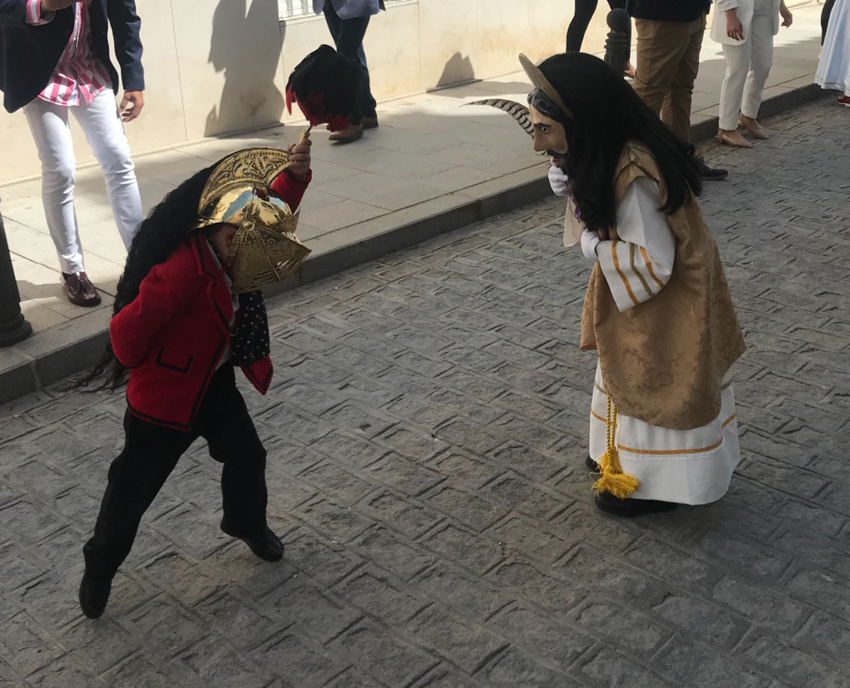
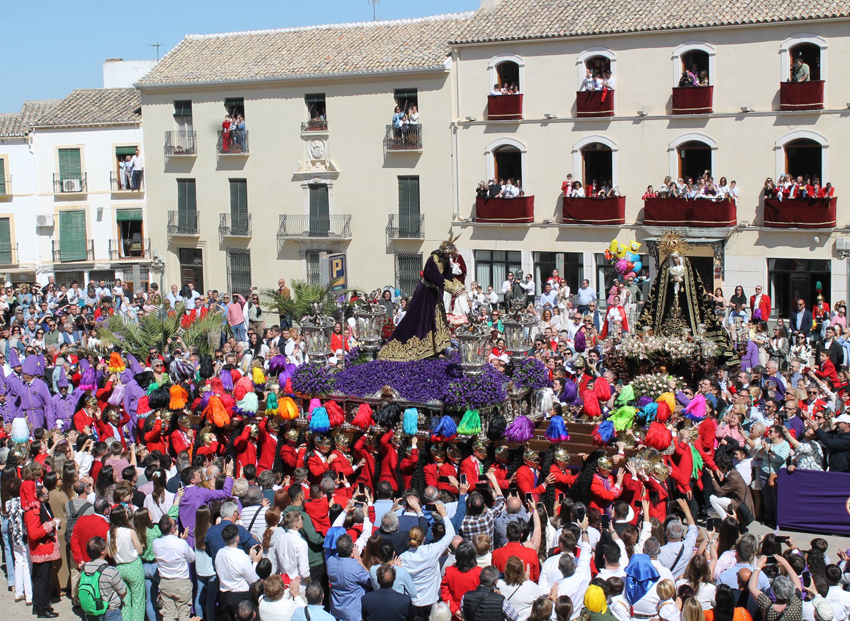
During Baena’s Holy Week, the most Andalusian expression of popular religiosity is extraordinarily combined with ancient and unique traditions. Among them, we can find century-old attire, such as the so-called “Trajecillos Blancos” and “Los Sayones”; Corporations and Brotherhoods of Biblical Figures, or the imposing presence of the “Judíos” and their drums. We can also witness different ceremonial protocols, such as the various gatherings of the “Turba de Judíos,” or admire the beautiful tradition carried out by the “Judíos” known as “Echar las Cajas” at dawn on Holy Wednesday. Furthermore, we can travel back in time and witness ancient “Pasos” or “Dramatic Representations,” such as “Los Prendimientos” (The Arrests), “El Paso del Evangelista” (The Evangelist’s Scene), “El Sorteo de la Túnica” (The Casting of Lots for the Tunic), “El Abrazo de los Apóstoles” (The Embrace of the Apostles), and even a sacramental play known as “El Costalico Romero,” which reenacts several passages from the Old Testament. The brotherhoods preserve rich traditions of processions and participation in liturgical acts such as the Holy Offices.